
HomeSkin & AestheticsDark Spots · Acne · Scars · Redness
Dark Spots · Acne · Scars · Redness

Dark spots and pigmentation, recurring acne, red acne marks, and pitted scars each have different underlying causes. The pigment's depth, sebum production, inflammation and vascular response, and the scar's shape and depth are checked first, and a targeted treatment plan is chosen based on skin condition.
Possible Related Treatment Directions
Dark Spots · Pigmentation · Pigmented Lesions
- Focused removal of dark spots & age spots
- Picosecond laser pigment treatment
- Pigment brightening (toning)
- Laser selection tailored to epidermal vs. dermal pigment type
Acne · Sebum · Inflammation
- Sebaceous-gland-targeted acne laser
- Energy-based treatment for inflammatory acne
- Acne extraction & skin care
- RF-based acne treatment
- Combined with medication when necessary
Redness · Red Acne Marks
- Vascular laser
- Post-acne erythema (PIE) treatment
- Improvement of recurring red marks
- Skin vascular & redness management
Pitted Acne Scars
- Autologous dermal regeneration
- Subcision
- RF microneedling
- Fractional CO2 laser
- Non-ablative fractional laser
- Picosecond fractional
- Collagen regeneration treatment
Related Laser, Energy & Regenerative Devices
Dark Spots · Pigmentation
- REEPOT
- PicoSure Pro
- PicoWay
- Hollywood Spectra
- RevLite SI
Acne · Sebaceous Glands
- Accure Acne Laser
- AviClear
- NEOBEAM 1450
- Hollywood Spectra
Redness · Red Acne Marks
- Vbeam
- excel V+
- PDL vascular lasers
Pitted Scars · Skin Regeneration
- JUVGEN (autologous dermal regeneration)
- POTENZA
- Secret RF
- eCO2 3D
- MOSAIC 3D
- PicoSure Pro
REEPOT Pigment Treatment — Reference Illustration
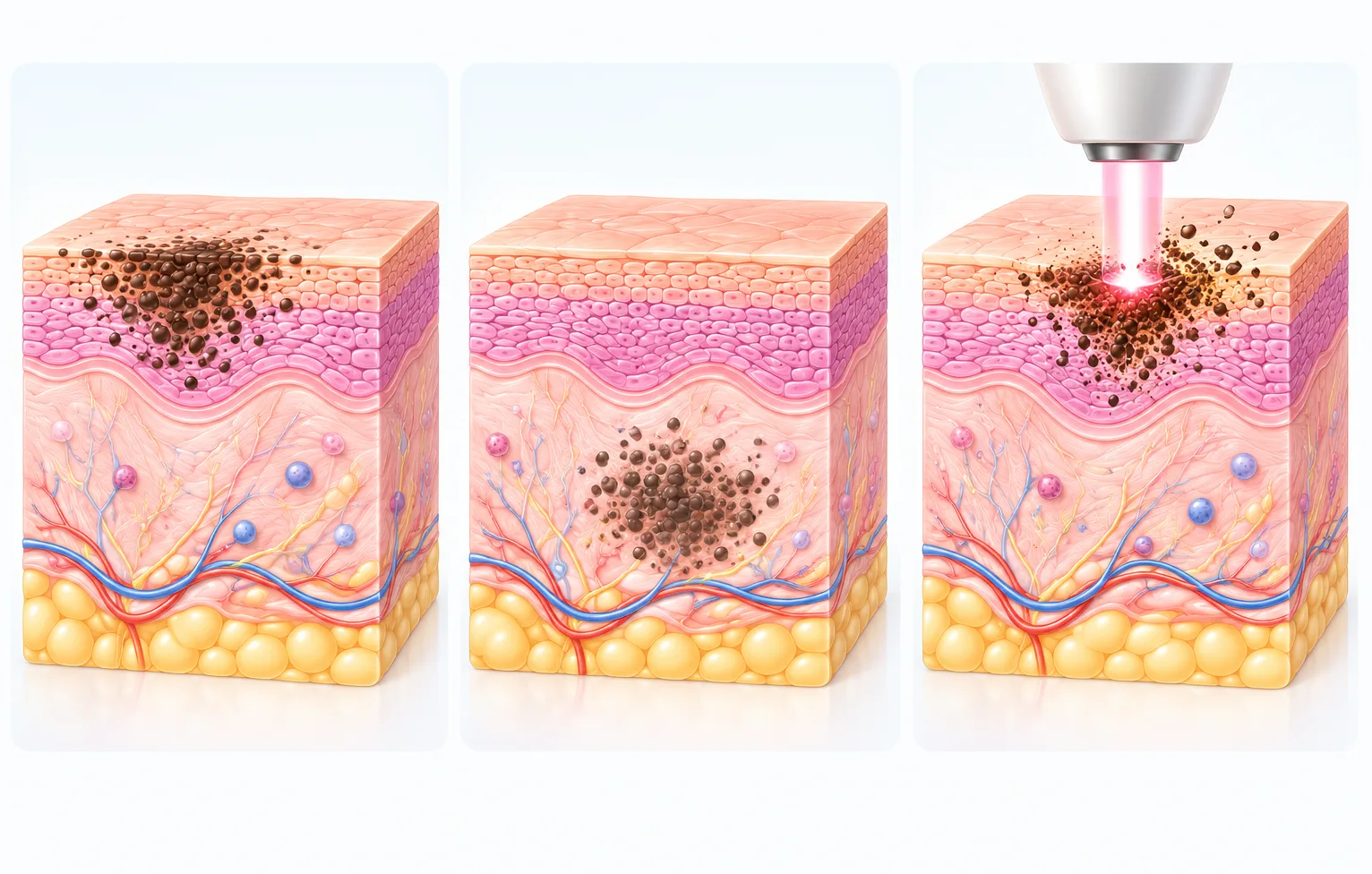
Laser energy at a specific wavelength targets pigment particles from the epidermis down to the dermis, breaking them apart so they can be gradually cleared through the body's natural metabolism, improving dark spots and pigmentation. The wavelength and treatment parameters should be evaluated and decided by a doctor based on the pigment's depth.
Hydrocolloid Dressing Care After Treatment
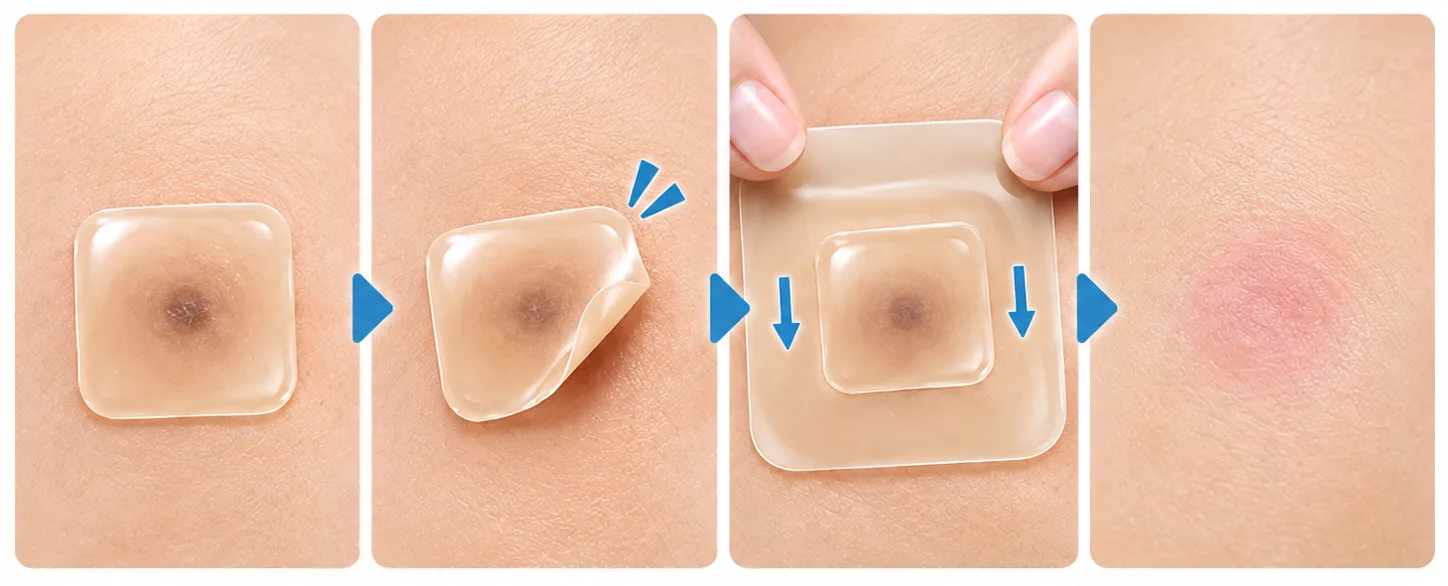
- 1Keep the dressing in placeCover the treated area with a hydrocolloid dressing after treatment.
- 2Do not remove it unnecessarilyKeep the area covered for approximately 3 weeks. If the edges begin to lift, do not peel off the original dressing.
- 3Cover with a larger dressingApply a larger hydrocolloid dressing directly over the existing one to keep the treated area fully covered and protected.
- 4After removing the dressingAfter approximately 3 weeks, remove the dressing as instructed by your doctor. The newly healed skin may initially appear slightly pink and will gradually blend with the surrounding skin tone.
※ Follow your doctor's instructions regarding dressing duration and replacement.
For details on the efficacy of each laser device, please click the orange consultation button to ask.